


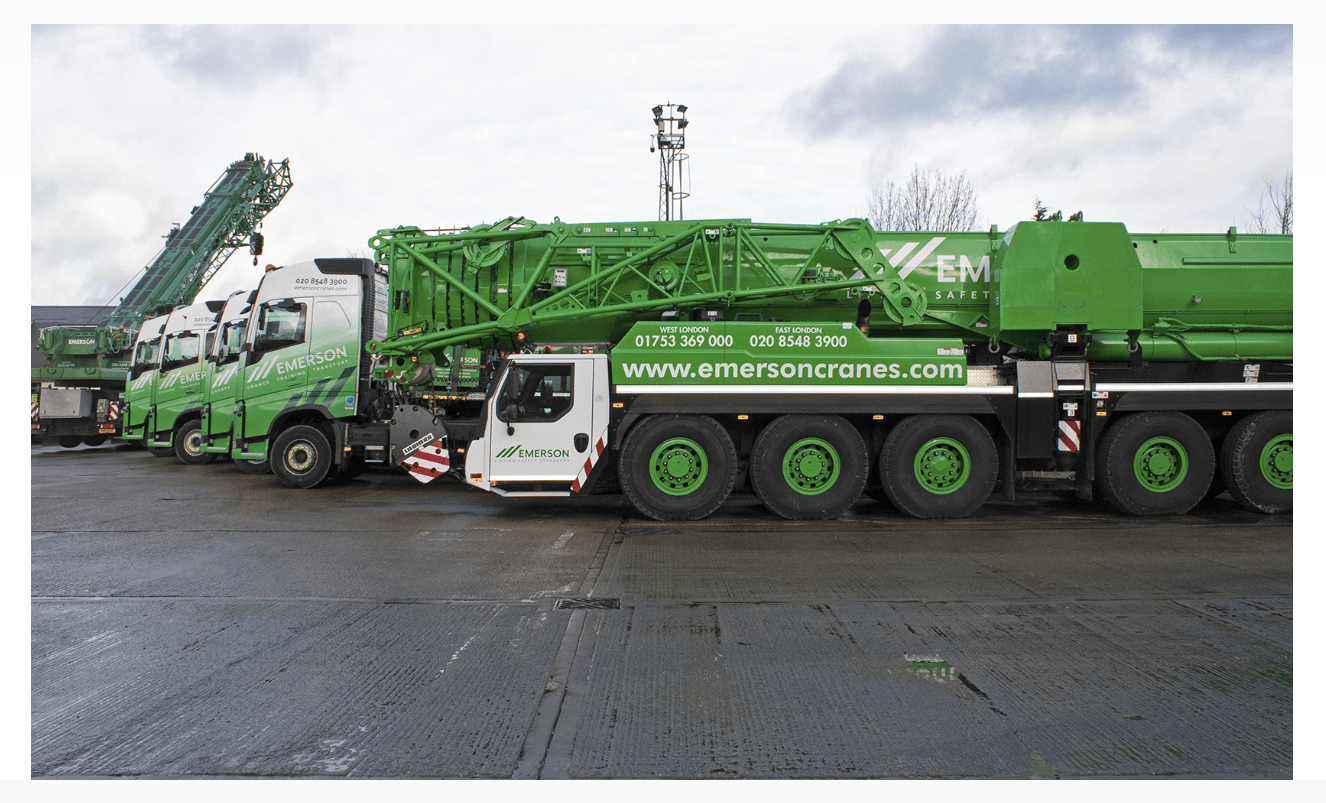
Choosing a crane is one of the most important decisions involved in planning a construction lift. The right crane can help keep the operation safe, efficient and on schedule, while unsuitable equipment can result in delays, additional costs and significant safety risks.
This decision can be particularly challenging in London, where construction sites frequently have restricted access, limited space, nearby buildings, busy roads and strict traffic-management requirements.
Whether you need to lift structural steel, glazing, plant equipment, building materials or prefabricated components, this practical crane selection guide UK construction teams can use explains the main factors you should consider before arranging crane hire in London.
Why Choosing the Right Crane Matters
It can be tempting to select a crane based solely on the maximum weight it can lift. However, crane selection is more complex than simply comparing the weight of the load with the crane’s stated capacity.
The crane must be capable of safely lifting the load at the required radius and height, while operating within the physical and environmental limitations of the site. Access, ground conditions, overhead restrictions, setup space and the position of the crane in relation to the load must all be considered.
The Health and Safety Executive identifies crane selection, lift planning, suitable work equipment, competent personnel, safe slinging and appropriate supervision as important elements of a safe lifting operation.
Professional planning is therefore essential when choosing the right crane for construction, particularly on complex or restricted London sites.
1. Understand What Needs to Be Lifted
The first step is to gather accurate information about the load.
Your crane hire provider will normally need to know:
• The total weight of the load
• The load’s dimensions and shape
• Whether the weight is distributed evenly
• The available lifting points
• Whether specialist lifting accessories are required
• Where the load is currently positioned
• Where the load must be placed
The weight of lifting accessories, including chains, slings, spreader beams and lifting beams, must also be considered as part of the total lifting requirement.
Emerson Cranes provides construction lifting equipment and accessories alongside project assessment, lift planning, site supervision, CAD drawings and method statements.
Never estimate the weight of an item where accurate manufacturer information, engineering drawings or certified weight details are available. Incorrect load information can affect the entire lift plan and may result in the wrong crane being supplied.
2. Calculate the Required Lifting Radius
The lifting radius is the horizontal distance between the crane’s centre of rotation and the final position of the load.
This is one of the most important factors in crane selection because a crane’s lifting capacity reduces as the working radius increases. A crane capable of lifting a particular weight close to its base may not be able to lift the same load when it must reach across a building, pavement or neighbouring structure.
For example, a lift that requires the crane to reach over a four-storey building will usually need a different crane configuration from a lift where the load can be positioned directly beside the crane.
When requesting a quote, provide accurate measurements or site drawings showing:
• The proposed crane position
• The load collection point
• The final placement point
• The height of surrounding structures
• Any obstacles located between the crane and the load
A professional crane provider can use this information to review the appropriate load charts and determine the correct crane capacity, boom length and configuration.
3. Assess the Required Lifting Height
The crane must be able to reach the necessary height while maintaining sufficient capacity at the required radius.
Consider the overall height of:
• The building or structure
• Scaffolding and temporary works
• Parapets and roof edges
• Nearby buildings
• Trees, cables and overhead services
• The load itself and its lifting arrangement
Additional boom length does not automatically mean that a crane is suitable. The working radius, boom angle, load weight and crane configuration must be considered together.
Emerson’s mobile crane fleet includes versatile all-terrain options designed for different lifting capacities, heights and site conditions. Available models include mobile cranes with capacities ranging from compact 40-tonne machines to larger heavy-lifting options.
4. Review Site Access and Available Space
Access is often one of the biggest challenges when arranging crane hire in London.
Before selecting a crane, consider whether the vehicle can safely reach the site. This includes checking:
• Road widths
• Gate and entrance dimensions
• Weight or height restrictions
• Tight corners
• Parked vehicles
• Low bridges
• Controlled parking zones
• Pedestrian access
• Space for the crane’s outriggers
• Space for supporting vehicles and lifting equipment
A large mobile crane may provide the required capacity but still be unsuitable if there is not enough room to enter, turn, set up or extend its outriggers safely.
Where access is extremely limited, a compact spider crane may provide a more appropriate solution.
Mobile Crane vs Spider Crane London: Which Is Best?
The right choice will depend on the load, working radius, access and available setup area.
When to Choose a Mobile Crane
Mobile cranes are commonly used for construction, infrastructure, commercial installation and specialist lifting projects.
They may be suitable where:
• Heavier loads need to be lifted
• A longer lifting radius is required
• The site can accommodate the crane and its outriggers
• The crane needs to travel between locations
• The lift involves structural steel, plant or large building components
• An all-terrain machine is needed for variable ground conditions
Mobile cranes offer a strong combination of lifting capacity, mobility and reach. Emerson operates a range of mobile cranes designed for both restricted urban sites and larger developments across London and the South East.
When to Choose a Spider Crane
Spider cranes are compact lifting machines that use extendable outriggers to create a stable working base.
They may be more appropriate where:
• Access is narrow or restricted
• The crane must work inside a building
• Floor loading must be carefully managed
• The crane needs to pass through a doorway or confined entrance
• Glazing, steelwork or machinery must be installed in a restricted area
• A smaller crane footprint is required
For example, Emerson’s UNIC 295 spider crane has a width of approximately 0.6 metres, allowing it to pass through standard doorways, while offering a lifting capacity of up to three tonnes under the appropriate configuration.
Spider cranes can be highly effective for atriums, courtyards, rooftops, basements and indoor installations. However, their compact size does not mean that planning requirements are reduced. The load, working radius, ground or floor capacity and outrigger positions must still be assessed.
When comparing mobile crane vs spider crane London options, the smallest crane is not necessarily the most economical, and the largest crane is not automatically the safest. The correct machine is the one that can complete the lift safely within its load chart while fitting the conditions of the site.
5. Check the Ground Conditions
A crane transfers substantial forces into the ground through its wheels, tracks or outriggers. Ground conditions must therefore be assessed before the crane is positioned.
Potential issues include:
• Soft or recently disturbed ground
• Underground drainage
• Basements and cellars
• Utility trenches
• Manhole covers
• Paving that cannot support concentrated loads
• Sloping or uneven surfaces
• Temporary groundworks
• Voids beneath the crane position
Suitable outrigger mats or supporting materials may be required to distribute the load safely.
The crane supplier must be given accurate information about the ground conditions. A site that appears firm at surface level may contain underground structures or services that affect its load-bearing capacity.
Where there is uncertainty, additional engineering information or a formal ground assessment may be necessary before the lift can proceed.
6. Identify Obstructions and Site Hazards
Every lifting operation should consider foreseeable hazards around the crane and load path.
These may include:
• Overhead power lines
• Scaffolding
• Trees
• Street furniture
• Nearby cranes
• Adjacent buildings
• Public highways
• Pedestrian routes
• Railway infrastructure
• Restricted airspace
• People working beneath or near the lifting area
The proposed load path should be reviewed from the initial pickup point through to its final position.
The HSE advises that lifting operations must be properly planned, appropriately supervised and carried out using a safe system of work. The plan should address identified risks, required resources, procedures and responsibilities.
7. Consider Road Closures, Parking Suspensions and Traffic Management
On many London projects, the crane cannot be positioned entirely within the construction site. It may need to operate from a public road, loading bay or controlled parking area.
This can create additional requirements, including:
• Road closure applications
• Parking bay suspensions
• Traffic-management plans
• Pedestrian diversions
• Local authority permissions
• Temporary signage and barriers
• Delivery scheduling
• Restrictions on operating hours
Applications should be made early, as approval times can vary between London boroughs.
Under its contract lifting service, Emerson can support administrative requirements such as liaising with local authorities and highway services, arranging road closure permits, parking suspensions and traffic management.
8. Decide Between Crane Hire and a Contract Lift
Choosing the right machine is only one part of arranging a lifting operation. You must also decide who will plan, manage and accept responsibility for the lift.
CPA Crane Hire
Under a standard crane hire arrangement, the customer generally retains responsibility for planning, supervising and carrying out the lifting operation.
This option is normally suited to organisations that already have:
• A competent Appointed Person
• An appropriate lift plan
• Suitable risk assessments and method statements
• Qualified lifting personnel
• Adequate insurance
• The knowledge required to select the correct crane
The HSE states that when a crane is hired, responsibility for planning, supervising and carrying out the lift rests with the crane user unless the crane company explicitly assumes those responsibilities under a contract lift.
Contract Lifting
Under a contract lift, the crane company takes responsibility for planning and managing the lifting operation within the agreed scope.
Emerson’s contract lifting service can include:
• An Appointed Person
• Site inspection
• Crane selection
• Lift planning
• Risk Assessments and Method Statements
• Crane supervision
• Crane operator
• Slinger/signaller
• Lifting accessories
• Traffic-management coordination
• Support with permits and road closures
This option is particularly valuable for complicated lifts or for customers who do not have the necessary expertise and competent personnel in-house.
Although customers frequently search for contract lifting services Essex, Emerson’s contract lifting support is available across London, Essex and nationwide.
9. Consider the Wider Project Schedule
The crane lift should be planned around the wider construction programme.
Before confirming a date, consider:
• When the load will arrive
• Whether the installation area will be ready
• Whether scaffolding will be complete
• Whether other trades need to stop work
• How long the road closure or parking suspension will remain valid
• Whether temporary works must be installed
• Whether the lift depends on suitable weather conditions
• What contingency arrangements are available
A crane that is left waiting because the load has not arrived or the site is not prepared can create unnecessary cost and disruption.
Early coordination between the crane company, principal contractor, logistics team, suppliers and site management can help prevent avoidable delays.
Common Crane Selection Mistakes
Some of the most common mistakes made when arranging crane hire include:
• Selecting a crane based only on load weight
• Underestimating the working radius
• Failing to account for lifting accessories
• Providing inaccurate load dimensions
• Ignoring underground structures or services
• Overlooking the space needed for outriggers
• Booking permits too late
• Assuming a crane can access the site without a survey
• Failing to identify overhead obstructions
• Choosing standard crane hire without having a competent lift-planning team
These risks can often be identified during an early site visit. The more accurate information the crane provider receives, the easier it is to recommend an appropriate lifting solution.
A Simple Crane Selection Checklist
Before contacting a crane hire company, gather the following information:
• What is being lifted?
• What is the exact weight of the load?
• What are its dimensions?
• Where will the crane be positioned?
• What is the maximum lifting radius?
• What height must the load reach?
• Are there access restrictions?
• What are the ground conditions?
• Are there overhead or surrounding obstructions?
• Will the crane operate on private land or a public highway?
• Are road closures or parking suspensions required?
• Do you have a competent Appointed Person?
• Do you need standard crane hire or a fully managed contract lift?
• What dates and operating hours are available?
Photographs, drawings, site plans and accurate load information should be supplied wherever possible.
Why Choose Emerson Cranes?
Founded in 1991, Emerson Cranes provides crane hire and contract lifting services for construction, infrastructure, industrial, utilities, rail and specialist lifting projects. Its construction services include lift planning, site supervision, CAD drawings, method statements, lifting accessories and traffic-management support.
With depots supporting projects across London, Essex and the surrounding areas, the Emerson team can assess your site, review the load requirements and recommend the right crane and lifting arrangement for your project.
Frequently Asked Questions
What information do I need to hire a crane in London?
You should provide the load weight and dimensions, required lifting radius, lifting height, site address, access restrictions, ground conditions and details of surrounding hazards. Site photographs and drawings are also extremely helpful.
How do I know what size crane I need?
Crane size depends on more than the weight of the load. The working radius, lifting height, boom configuration, lifting accessories and site conditions must also be considered. A professional crane provider should review these factors before recommending a machine.
Is a spider crane suitable for a construction site?
Spider cranes can be ideal for restricted-access sites, indoor areas, courtyards, glazing installations and locations where a compact footprint is required. Their suitability will depend on the load, radius and ground or floor conditions.
What is the difference between crane hire and contract lifting?
With standard crane hire, the customer generally remains responsible for planning and managing the lifting operation. With a contract lift, the crane company assumes responsibility for planning and executing the lift within the agreed scope.
Do I need a site survey before booking a crane?
A site survey is strongly recommended for complex, heavy or restricted lifts. It allows access, ground conditions, lifting radius, obstructions, crane setup and traffic-management requirements to be properly assessed.
Can a crane operate from a London road?
It may be possible, but permits, parking suspensions, traffic management or a road closure may be required. The precise requirements will depend on the local authority, road and lifting operation.
Speak to Emerson About Crane Hire in London
Every lifting operation is different. The safest and most efficient approach is to involve an experienced crane specialist at the earliest possible stage.
Emerson Cranes can assess your load, site access, lifting radius and project requirements before recommending an appropriate crane hire or contract lifting solution.
Contact the Emerson team on 020 8548 3900 to discuss your construction project or request a free crane hire quotation.
