


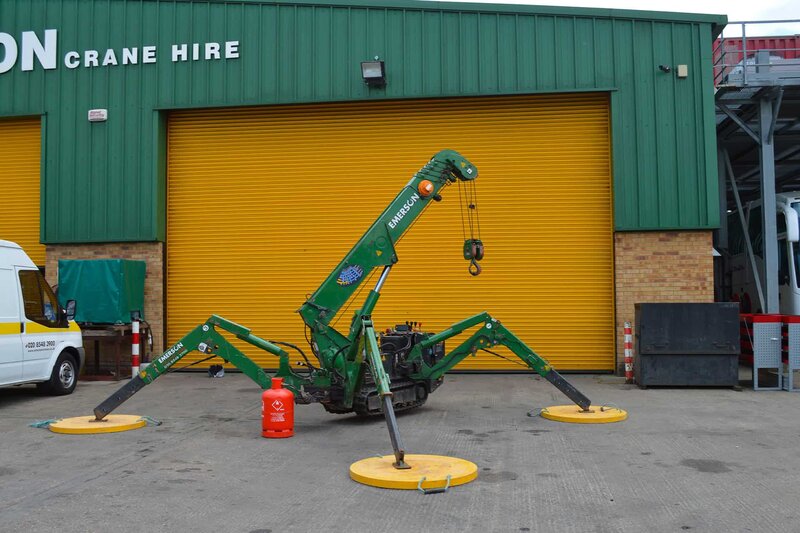
Not every lifting job takes place in an open, easily accessible space. Many projects involve tight entry points, indoor settings or busy sites where disruption needs to be kept to a minimum.
In these situations, traditional cranes are not always the most practical option. Their size, setup requirements and positioning constraints can make certain lifts difficult, or even impossible, to carry out safely.
This is where spider cranes come into their own. Designed to operate in confined and complex environments, they provide a reliable alternative when larger equipment cannot be used.
Knowing when to use a spider crane and what it is best suited for can help ensure lifting operations are completed safely and efficiently from the start. Read on to learn more.
What is a Spider Crane?
A spider crane is a compact lifting solution designed for use in restricted or hard-to-reach areas. Despite its smaller size, it delivers impressive lifting capability along with a high level of control.
Key features include:
- A compact design that can pass through narrow entry points, including doorways
- Outriggers that provide stability during lifting operations
- Strong lifting performance relative to its size
As a result, these cranes are commonly used where space is limited or where a larger machine would be impractical to position. Their ability to work within confined environments makes them a versatile option across a wide range of industries.
When Should You Use a Spider Crane?
A spider crane is typically the best option when site conditions limit the use of larger equipment or when a more adaptable lifting solution is required.
In most cases, this comes down to a combination of available space, site layout and the nature of the lift itself.
Restricted Access
Where entry points are narrow or there is no direct road, positioning a traditional crane can be difficult. However, spider cranes can be moved into place and set up within tight areas, allowing work to proceed where access would otherwise be a barrier.
Indoor Lifting
Some projects require lifting operations to take place inside buildings, such as warehouses, commercial units or public spaces. In these environments, manoeuvrability is essential, making spider cranes a suitable choice.
Confined Work at Height
When lifting must be carried out at height within a limited area, both reach and precision become critical. Spider cranes are often used for tasks such as glazing or steel installation, where controlled and accurate movement is required.
Sensitive Ground Conditions
On sites with finished flooring, landscaping or delicate surfaces, protecting the ground is a key consideration. Spider cranes use outriggers to distribute weight more evenly, helping to minimise surface pressure.
Busy or Built-Up Environments
In city centres or occupied locations, space is often restricted and disruption must be carefully managed. A spider crane’s compact footprint allows it to operate more efficiently, with less impact on surrounding activity.
Taken together, these factors mean that if a standard crane cannot safely operate on-site, a spider crane is often the most practical and efficient alternative.
What Projects Are Spider Cranes Best Suited For?
Due to their flexibility, spider cranes are used across a wide range of projects, particularly where working space is limited.
Common applications include:
- Glass installation and glazing, including atriums and curtain walling
- Construction and steelwork in tight or restricted areas
- Building maintenance, such as HVAC installation, roof work and plant replacement
- Historic or listed building projects where care and precision are required
- Machinery and plant installation within industrial or commercial settings
Although these projects vary, they often present similar challenges. Limited working areas, restricted entry points or sensitive surroundings all make spider cranes a practical and reliable choice.
Why Choose a Spider Crane?
The main advantage of a spider crane is its ability to operate where larger cranes cannot. This makes it particularly useful on sites with limited room or challenging layouts.
In addition, spider cranes offer:
- High lifting capability relative to their size
- Suitable for both indoor and outdoor use
- Reduced disruption to surrounding areas
- Quick setup, helping to keep projects on schedule
Selecting the right equipment early can help reduce delays, control costs and ensure lifting operations run smoothly from start to finish.
Making the Right Choice for Your Site
Spider cranes are designed for environments where space, layout or site conditions limit other options. Their flexibility makes them a dependable solution for a wide range of lifting tasks, particularly where traditional cranes are not practical.
However, selecting the right crane depends on a clear understanding of the project requirements. Factors such as site access, load weight, lift height and ground conditions all need to be carefully considered.
Get in Touch
At Emerson Cranes, we support clients by assessing site conditions and planning lifts to ensure the most suitable equipment is used.
If you’re unsure whether a spider crane is the right fit for your project, our team can help you plan a safe and efficient lift from the outset. Contact us today to discuss your requirements.
