


When it comes to lifting operations, no two jobs are ever the same. The right crane for one project might be completely unsuitable for another, which is why understanding the key crane types and their benefits can make all the difference.
At Emerson Cranes, we’re all about matching the right equipment to the right project. Whether you’re managing a complex city lift, a residential development or a large construction site, each crane type offers its own advantages.
In this guide, we’ll take a closer look at four of the most popular crane types we offer, their uses, pros and potential cons so that you can make an informed choice for your next project.
Mobile cranes
Mobile cranes are among the most widely used in the industry, valued for their flexibility and fast setup times. Mounted on a truck or vehicle, they can be driven directly to the site, making them ideal for projects that need quick deployment and efficient lifting.
Typical uses:
- Construction and infrastructure projects
- Material handling and logistics
- Short-term or multi-site lifts
Pros:
- Easy to transport and move between sites
- Can be set up quickly with minimal preparation
- High lifting capacity for their compact size
Cons:
- Requires stable, level ground for safe operation
- Limited performance on rough or off-road terrain
Emerson’s mobile crane fleet includes 40T, 60T, 90T, 110T and 130T cranes – offering reliable lifting power for everything from small construction jobs to complex, heavy-duty operations. Our mobile cranes combine power and precision, supported by rigorous maintenance and safety checks to ensure dependable performance on every lift.
Mobile tower cranes
Mobile tower cranes offer the height and reach of a traditional tower crane, but with the flexibility of a mobile unit. They can be transported and assembled quickly, making them a great choice for urban environments or time-sensitive projects.
Typical uses:
- City construction projects
- Roof installations and façade work
- High-rise developments
Pros:
- Fast setup and dismantling
- Excellent height-to-footprint ratio
- No need for fixed foundations
Cons:
- Lower lifting capacity than static tower cranes
- Requires experienced operators for setup
Our mobile tower cranes are engineered for efficiency and accuracy, delivering safe and controlled lifting even in tight or complex urban sites.
Telescopic crawler cranes
Telescopic crawler cranes combine the reach of a telescopic boom with the stability of crawler tracks, making them well-suited to uneven or off-road terrain. They’re a reliable option for projects that demand both strength and flexibility.
Typical uses:
- Infrastructure and civil engineering projects
- Renewable energy installations
- Off-road or soft-ground applications
Pros:
- Excellent stability and traction
- Can travel with a suspended load
- No outriggers required
Cons:
- Slower travel speed than wheeled cranes
- Larger footprint on site
From compact 6-ton models to powerful 100-ton machines, our telescopic crawler cranes are designed for dependable performance, even in challenging environments.
Spider cranes
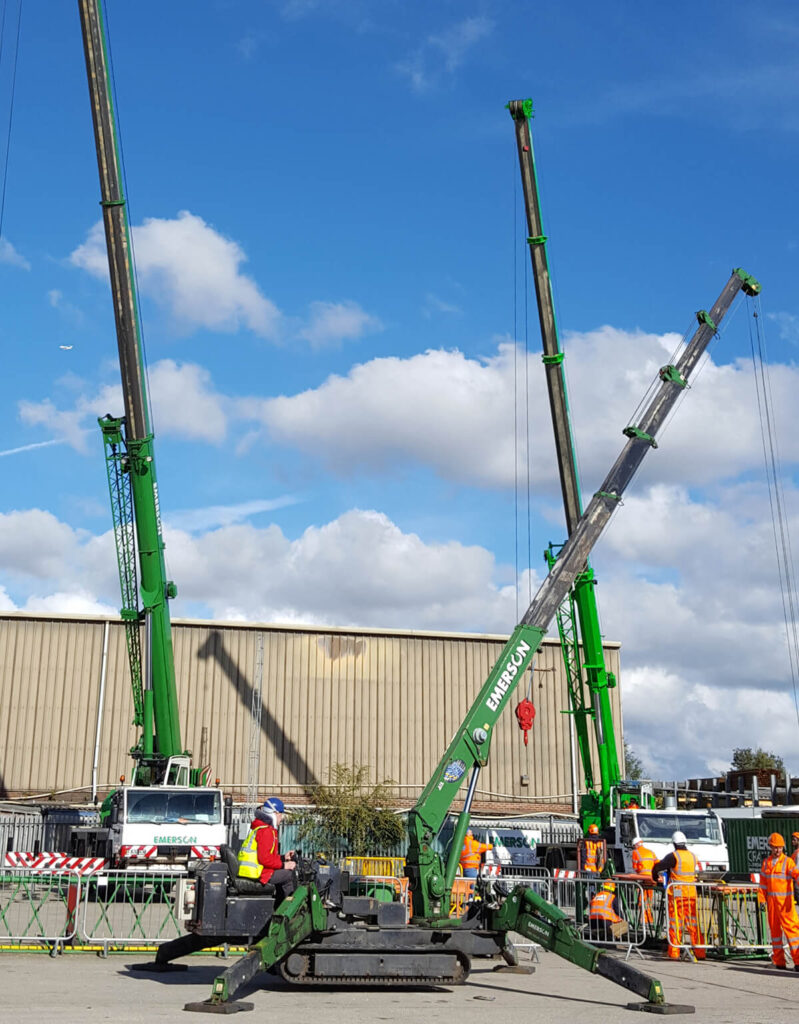
Spider cranes are designed for areas where space is limited or access is restricted. Small but capable, they can fit through standard doorways and operate indoors, making them an ideal choice for lifting in confined environments.
Typical uses:
- Indoor or confined space lifting
- Glazing, maintenance and restoration work
- Urban or restricted-access projects
Pros:
- Compact design with excellent manoeuvrability
- Lightweight and easy to transport
- Quick to set up and operate
Cons:
- Lower lifting capacity than larger cranes
- Requires stable and level ground
Our spider cranes include 2.9T, 3T and 6T spider cranes. They’re compact, versatile, and ideal for precise lifting where larger machinery can’t operate. Each one is maintained to the highest standards, offering a safe and reliable solution for work in tight or delicate environments.
Choosing the right crane for your project
Still unsure which crane suits your project best? You’re not alone — it’s one of the most common questions we’re asked. The right choice depends on several factors, including:
- Weight and dimensions of your load
- Space and access on-site
- The ground conditions
- Lifting height and radius you need
The Emerson Cranes approach
At Emerson Cranes, we don’t just provide cranes – we deliver complete lifting solutions. Each hire begins with a detailed assessment of your site and lifting requirements, followed by expert recommendations from our experienced team.
Once your crane is on site, our operators and lift planners ensure every stage of the process is carried out safely and efficiently. And after each project, our post-hire reviews help us continue improving our service, making every lift safer and smoother than the last.
Every crane type has its strengths, and understanding these differences helps you plan with confidence. Whether you need compact manoeuvrability or heavy-duty lifting power, our crane fleet for hire has you covered.
To learn more about any of the crane types mentioned here, or to speak to our team about your next project, get in touch with us today on 020 8548 3900.
