


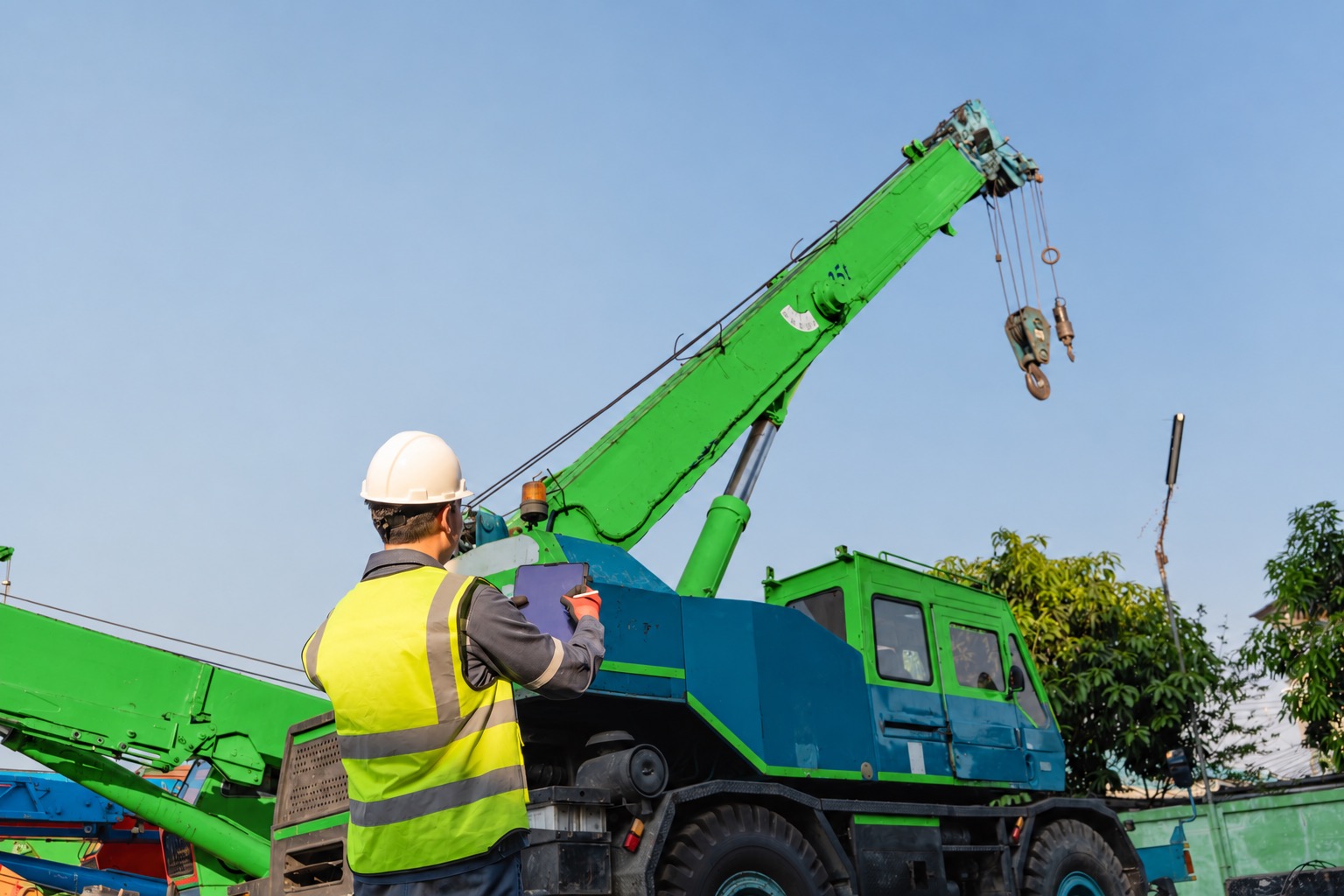
A mobile crane may be capable of lifting many tonnes, but its capacity means very little if the ground underneath it cannot safely support the forces created during the lift.
That is why crane ground conditions form such an important part of lift planning.
Soft ground, recently backfilled trenches, underground services, basements and even apparently solid paved surfaces can all affect where and how a crane can be positioned.
Where the ground cannot safely support the loads imposed by the crane, additional measures such as crane mats or spreader systems may be required.
Emerson Cranes provides crane mat hire alongside mobile crane hire and fully managed contract lifting services, allowing ground conditions to be considered as part of the wider lifting operation.
Why Are Ground Conditions So Important for Cranes?
Mobile cranes create substantial forces at their points of contact with the ground.
When a crane operates on outriggers, those forces can become concentrated through a relatively small number of outrigger feet.
The Health and Safety Executive identifies crane collapse as one of the principal hazards associated with mobile crane operations and requires lifting operations to be properly planned by a competent person, appropriately supervised and carried out safely.
If the ground beneath an outrigger settles or fails unexpectedly, the crane can become unstable.
That makes the condition of the ground just as important as factors such as:
- Load weight
- Lifting radius
- Boom configuration
- Crane size
- Wind conditions
- Lifting accessories
Ground assessment should therefore happen before the crane arrives, not once setup has begun.
What Is Ground Bearing Capacity?
Ground bearing capacity describes how much pressure the ground can safely support.
Different surfaces have very different capabilities.
For example, firm engineered hardstanding may behave very differently from:
- Recently disturbed soil
- Made ground
- Waterlogged ground
- Gravel
- Grass
- Asphalt
- Concrete slabs
- Areas above basements or voids
The surface appearance alone does not necessarily tell you what is underneath.
Temporary Works Forum guidance highlights factors including layered soils, weak strata, sloping ground, buried services, tunnels, basements and proximity to retaining walls or excavations when assessing outrigger loading.
This is why simply looking at a hard surface and assuming it will support a crane is not enough for a complex lift.
What Can Affect Crane Ground Conditions?
A site that appeared suitable several weeks ago may not necessarily remain suitable.
Factors that can change ground conditions include:
Heavy Rain
Prolonged rainfall can soften soil and reduce its ability to support loads.
Excavation and Backfilling
Ground that has recently been excavated and replaced may not have the same bearing capacity as undisturbed ground.
Underground Services
Drainage pipes, service ducts, chambers and other buried infrastructure can create local weaknesses.
Basements and Structures Below Ground
A paved area may sit above an underground car park, basement or other structure that needs separate assessment.
Slopes and Edges
Crane setup close to excavations, retaining walls, embankments or changes in ground level can introduce additional risks.
Emerson assesses ground conditions during site surveys for contract lifts alongside access, crane positioning, obstructions and the lifting requirements themselves.
What Are Crane Mats?
Crane mats are used to help distribute the forces imposed by cranes and other heavy equipment over a larger surface area.
Rather than allowing the load to act through a relatively small outrigger foot, a suitably designed mat spreads that pressure across a wider area.
Emerson Cranes provides a variety of mobile crane mats, including:
- Steel mats
- Timber mats
- Plastic mats
- Crawler mats
- Road plates
Different sizes and materials suit different cranes, loads and site conditions.
Crane mats are not a way of making unsuitable ground automatically safe. The underlying ground still needs to be properly assessed.
When Do You Need Crane Mats?
There is no simple rule saying that one particular type or size of crane always needs a mat.
The requirement depends on the forces produced by the crane and the capacity of the ground supporting it.
Mats may be needed where:
- Ground bearing pressure needs to be reduced
- The surface is soft or vulnerable
- Outrigger loads need wider distribution
- Ground conditions vary across the setup area
- The site includes temporary working platforms
- Additional surface protection is required
- A crane is operating on sensitive hardstanding
The correct solution needs to be determined during lift planning.
HSE construction guidance illustrates mobile cranes supported on outriggers with packing used to prevent the supports sinking into the ground.
Are Outrigger Pads and Crane Mats the Same Thing?
The terms are sometimes used loosely, but there can be differences in scale and application.
An outrigger pad normally sits directly beneath an individual outrigger foot.
Larger crane mats or spreader systems may cover a much greater area to distribute higher forces or support more demanding ground conditions.
For particularly heavy cranes or complex ground conditions, the required solution may need engineering calculations rather than relying on a standard mat size.
Industry guidance makes clear that more complex situations — including larger cranes, layered soils and unusual ground conditions — need more detailed consideration.
Can You Put a Crane on Tarmac or Concrete?
Potentially, but a hard surface does not automatically mean the ground is suitable.
Tarmac may sit over weaker sub-base materials, while concrete may conceal:
- Underground services
- Chambers
- Basements
- Voids
- Recently backfilled excavations
The thickness, construction and condition of the surface also matter.
For larger or more demanding lifts, information about what lies beneath the surface may be required before the crane setup can be confirmed.
Who Is Responsible for Checking the Ground?
This depends partly on how the crane is hired.
With standard CPA crane hire, the hirer retains significant responsibility for planning and managing the lifting operation, including providing suitable ground and site conditions.
Emerson Cranes’ CPA hire terms state that the hirer is responsible for preparing and maintaining the ground from which the crane and support vehicles will operate.
With a contract lift, Emerson takes responsibility for planning and executing the lifting operation within the agreed scope, including assigning an Appointed Person, carrying out the site assessment and preparing the lift plan and RAMS.
Understanding that distinction before booking is important.
What Happens During a Crane Site Survey?
For a complex lift, the site survey allows the lifting team to assess the actual working environment.
Ground-related checks may include:
- Proposed crane position
- Surface condition
- Evidence of excavations or backfill
- Underground services
- Nearby chambers
- Slopes and changes in level
- Access for the crane and support vehicles
- Space for outriggers and mats
The findings can then be considered alongside the crane configuration, load weight and lifting radius.
Early assessment also makes it possible to arrange any required crane matting before the crane arrives.
Emerson Cranes can deliver its mats using HIAB or articulated vehicles and, where appropriate, arrange for them to be positioned ahead of the crane mobilisation.
Don’t Leave Ground Conditions Until Lift Day
Ground problems discovered after the crane arrives can lead to delays, additional equipment requirements or, in some cases, a lift being unable to proceed.
Providing accurate information early can therefore help reduce disruption.
If you are arranging a crane lift, tell the lifting provider about:
- Previous excavations
- Underground structures
- Known services
- Surface construction
- Recent groundworks
- Drainage
- Areas prone to flooding
- Any concerns about ground strength
The more information available during planning, the easier it is to determine an appropriate crane setup.
Frequently Asked Questions
Why are crane mats used?
Crane mats help spread loads from a crane or its outriggers across a larger area of ground. This can reduce concentrated ground pressure and provide additional support where required, but the underlying ground still needs to be assessed as suitable.
How do you know if the ground is strong enough for a crane?
Ground suitability depends on the bearing capacity of the site and the loads the crane will impose during the lift. Complex lifts may require site investigation, ground information or engineering assessment before an appropriate setup can be confirmed.
Can a crane operate on soft ground?
It may be possible with appropriate preparation and load-distribution measures, but this depends on the specific ground conditions and crane loads. Soft or unstable ground should be identified during planning so that suitable controls can be designed before lifting begins.
Planning a Lift? Check the Ground First
Successful crane hire starts beneath the crane.
Ground bearing capacity, underground structures, outriggers and load distribution all need to be considered alongside the crane itself.
Emerson Cranes provides mobile crane hire, contract lifting and crane mat hire for lifting projects across London, Essex, the South East and beyond.
For more complex operations, Emerson Cranes’ lifting team can assess the site and determine the appropriate crane, configuration and ground-support requirements as part of the lift-planning process.
To discuss an upcoming lift, contact Emerson Cranes or call 020 8548 3900.
